We’re funding £5,000 to equip Ella Africa Foundation’s existing sewing workshop at Fábrica de Sabão. The funding covers eight industrial sewing stations, a shared overlocker for finishing seams, supporting equipment and tools, installation and initial training materials.
The equipment has an expected lifespan of 10 years. Ella Africa Foundation will own the machines, while Fábrica de Sabão hosts them. An Asset Hosting Agreement sets out access, responsibility for maintenance and what happens if the hosting arrangement ends.
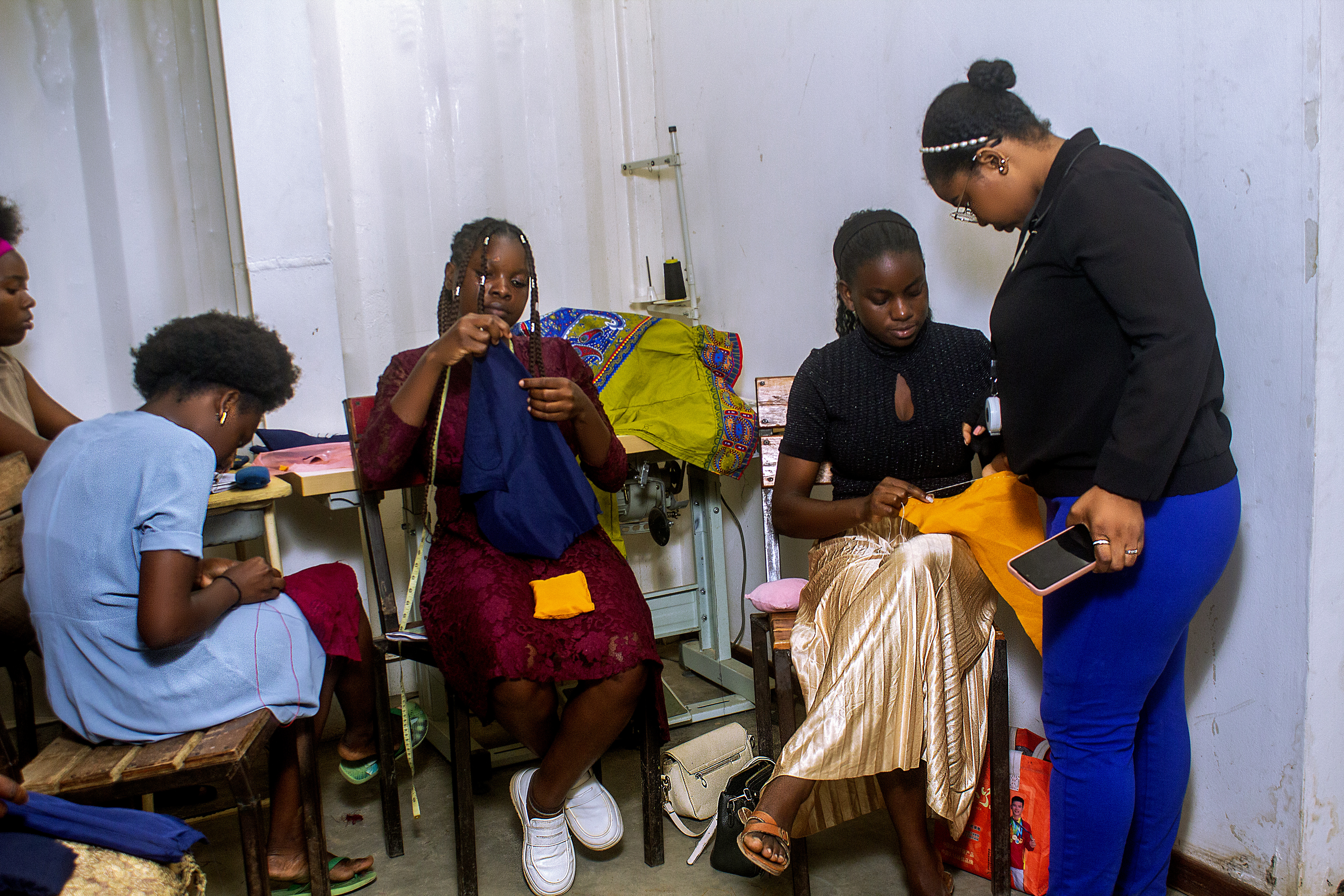
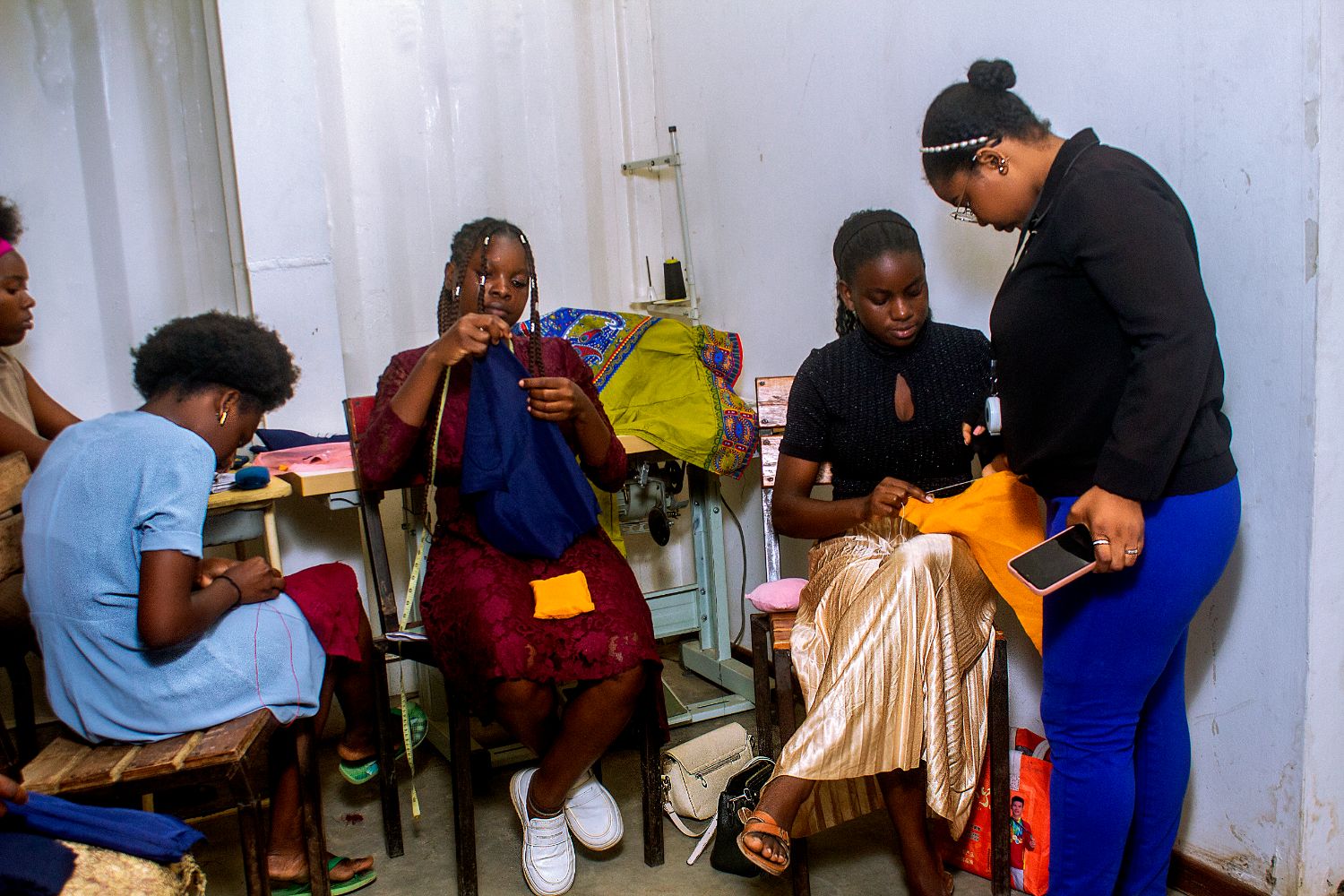
The workshop is designed for groups of up to 16 women taking three-month sewing courses. Training focuses on work with a local market, including school uniforms and alterations.
The equipment stays in place as each group finishes. Outside class hours, the plan is to make the stations available to other hub members for a usage fee. Graduates who show an aptitude for teaching will receive facilitator training to help lead later groups.
Sewing training from the earlier programme. Existing programme, before the newly funded equipment.
Why this asset matters here Kwanda’s earlier funding supported Ella Africa’s literacy pilot in Luanda. Of the 29 women who enrolled, 24 completed the course. Attendance rose from about half to about four-fifths once transport stipends covered the cost of getting to class.
That pilot showed how much participation depended on an everyday expense. Sewing presents another practical barrier: learning a trade requires time on equipment, and Ella Africa’s vocational programme has lacked machines of its own.
This grant funds shared equipment that can remain available beyond a single course. Whether that access translates into paid sewing work is an outcome the project will track.
The grant covers equipment, installation, initial materials and training for workshop leaders and machine maintenance.
Our funding equips the existing workshop. Ella Africa and Fábrica de Sabão remain responsible for the premises, trainers and ongoing operation. Membership contributions and planned equipment-use fees are intended to fund repairs; that maintenance model remains to be tested.
Maintenance training and local technical support are included to help keep the machines usable between cohorts.
Ella Africa Foundation runs literacy and vocational education in Luanda. Its vocational programme, Project Moana, includes six classes, with sewing identified as a route into locally available work.
Ella Africa’s trainers and volunteers will deliver the initial courses, while graduates train to take on more teaching responsibility.