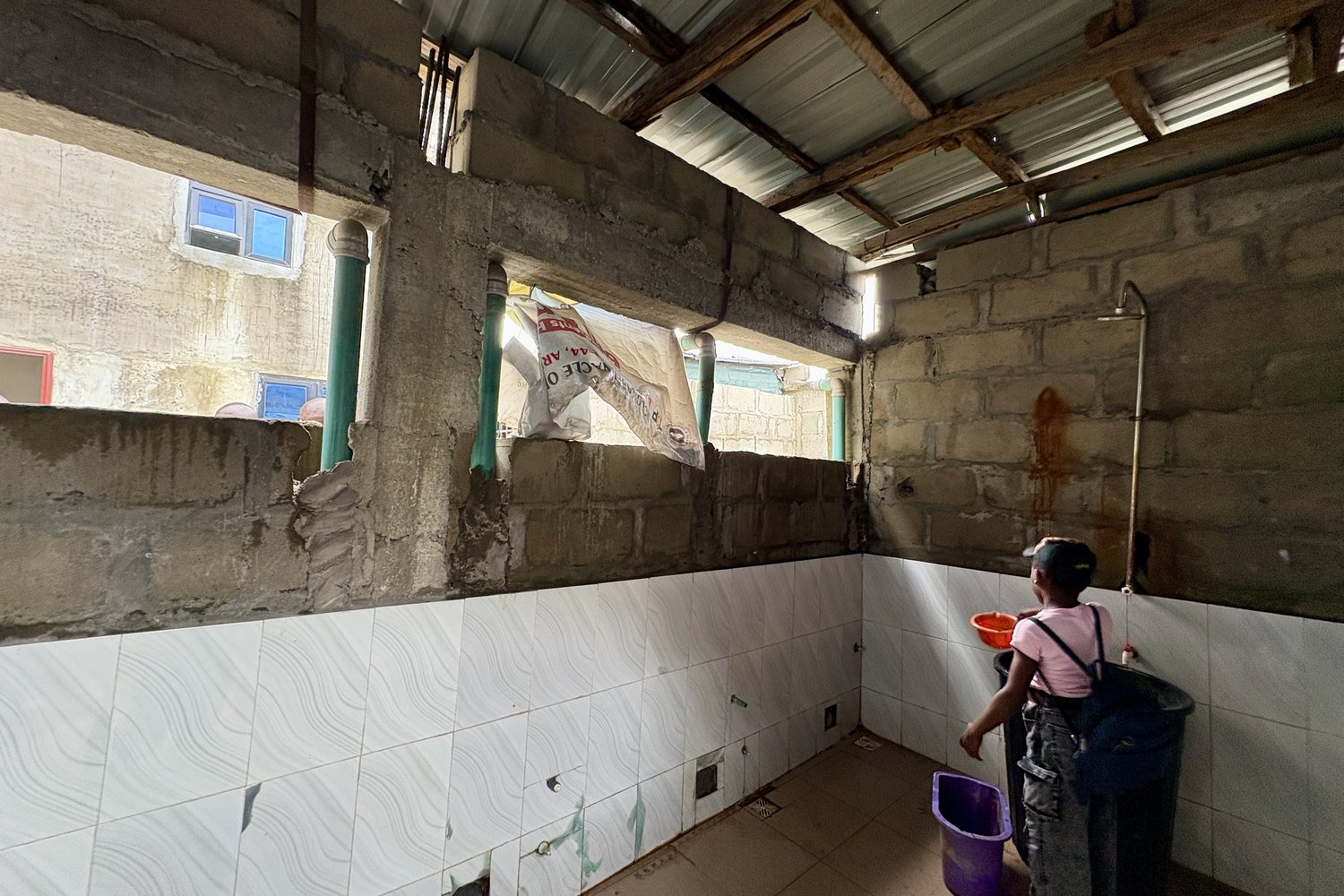
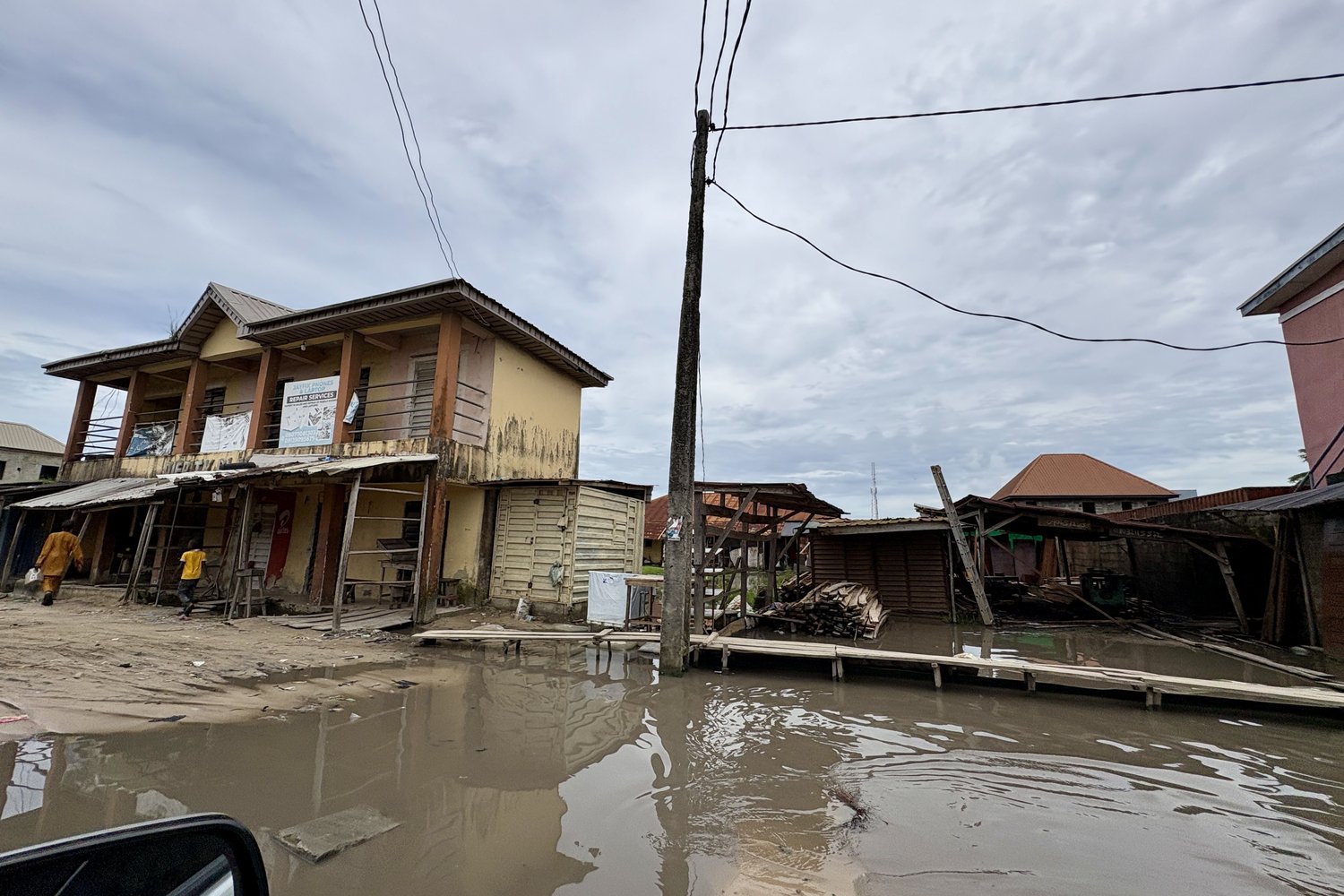
As at 2 September 2026, the clinic is not open yet. Renovation began in late August, and AHA Initiative expects to open the doors within 8 to 12 weeks, which is how long the first two took.
TOP Community Health Centre is a permanent primary healthcare clinic in Onosa, on the outskirts of Lagos. Tabernacle of Praise, a church in the community, donated an unused restroom and storage area that already meets Lagos State size rules. Kwanda's funding pays for the renovation to Lagos State standards, the equipment, the medical stock and the first year of staffing. The community picked the name: TOP for Tabernacle of Praise, and for the standard of care they expect from it.
AHA Initiative owns the clinic and the fit-out, in a building donated by the church. A community governance committee in Onosa holds it to account. The fit-out and the medical equipment are built to last about 10 years.
It is built to cost little to keep open. The premises are free, and AHA Initiative budgets $470 a month to run the clinic, covering two nurses' salaries and medical stock. Kwanda covers those running costs a year at a time, as we do at the first two clinics. The aim is that each clinic needs less of that funding over time, not that it needs it forever.
Free primary healthcare, every weekday, for anyone in Onosa.
The clinic opens Monday to Friday, 8am to 4pm. Nurses give consultations, treatment, medication and basic tests. Mosquito nets, menstrual products and health information go out alongside. AHA Initiative's target for the first 12 months is at least 3,600 residents.
For scale, Safe City and Care Circle each see about 300 people a month, and a visit costs $1.33, medicine included.
Why this asset matters here Around 60% of Nigerians are multidimensionally poor and over 40% live on less than $1.90 a day. Healthcare is the first cost a stretched household drops, and malaria alone still kills more than 200,000 people a year in a country where the cure has existed since 1932.
Onosa has had no free primary care option. When AHA Initiative assessed the community in November 2025, residents described losing neighbours to conditions that could have been treated. A leader at the church that donated the space put it plainly: "We've lost a mother in our community because by the time she got to a hospital, her hypertension was already fatal, and she didn't even know she had high blood pressure."
The building came from the community, so no funding goes on premises. The one-off cost is the renovation. The assessment found it lighter than either of the first two, because the structure is sound and already the right size.
Beyond that, the clinic runs on roughly $470 a month for two nurses' salaries and medical stock. Kwanda covers running costs a year at a time, as at the first two clinics, and budgets on the assumption that nothing else comes through.
The push is to need us less each year, and it already works in part. Care Circle's first funding was meant to cover six months and lasted nine, because community contributions and the clinic's recycling programme covered the gap.
In Onosa, AHA Initiative wants to test three ways of carrying the cost: reimbursement through Lagos State's health insurance scheme, nurses and physicians supplied by the National Youth Service Corps, and gradual community ownership with local fundraising. The insurance route would in principle cover the full cost, but it is the slowest to arrive. The Youth Service route would cover about 40%, and community ownership up to 60%. None is a commitment. Each one that lands is running costs the clinic no longer needs from us.
TOP Community Health Centre is run by the AHA Initiative, founded by Tolani Yesufu. Tolani returned to Nigeria in 2022 after studying at Harvard Medical School, Columbia Business School and Cornell University, concerned by the scale of health inequality she had watched from a distance, where people were dying of conditions that were straightforward to treat.
Her approach is to work with communities to secure disused buildings, from churches to shopfronts, and turn them into low-cost clinics staffed by local nurses and volunteer doctors. Onosa is the third. Safe City opened in Oworoshoki in December 2024, and Care Circle in Itire-Surulere in October 2025.