

Summary
We're proposing to use $14,300 from our village pot to turn a donated space in Onosa, Lagos into our third free healthcare clinic.
Onosa sits on the outskirts of Lagos and has no affordable healthcare. Every Sunday, volunteer nurses set up a table with a thermometer, a blood pressure machine and whatever medicine they can gather. About 150 people come, but the medicine runs out before the queue does, and from Monday to Saturday there is nowhere to go.
A church there has donated a space that we can turn into a clinic. Renovating it means free healthcare access throughout the week, with the first year of running costs covered. It would be our third clinic in Lagos. Our first two clinics in Oworoshoki and Surulere have treated 11,195 patients.
A visit costs $1.33, medicine included.
The Story
Our first clinics went up the same way. A community partner donates an unused space, we fund the renovation to Lagos State standards, and two registered nurses staff it Monday to Friday with volunteer doctors on rota.
Both clinics are still open and have treated 11,195 patients between them. That is cumulative, from Safe City opening in December 2024 and Care Circle in October 2025:
They reach the people they were built for. At Safe City, our first clinic, patients support families on about $11.60 (£9) per person per month. At Care Circle the average is $4.90 (£4), supporting a household of four. Malaria and hypertension are the two most common conditions at both sites, exactly the preventable, treatable things that turn fatal when care is out of reach.
Malaria and hypertension are what most people come in with. Both are cheap to treat early and dangerous when left, and these were the conditions treated at Safe City in May:
They cost very little to run. Safe City cost $416 (about £330) to operate in May. Care Circle cost $402 (about £320). That is a functioning clinic, medications included, for roughly $13 a day.
A clinic visit costs $1.33. Both clinics landed on the same figure in May, independently of each other:
They stretch further than we budget for. Care Circle's funding was meant to cover six months and lasted nine, to May 2026, because community contributions and the clinic's plastic recycling programme covered the gap. In those extra three months it served over 2,000 people.

Why a third clinic
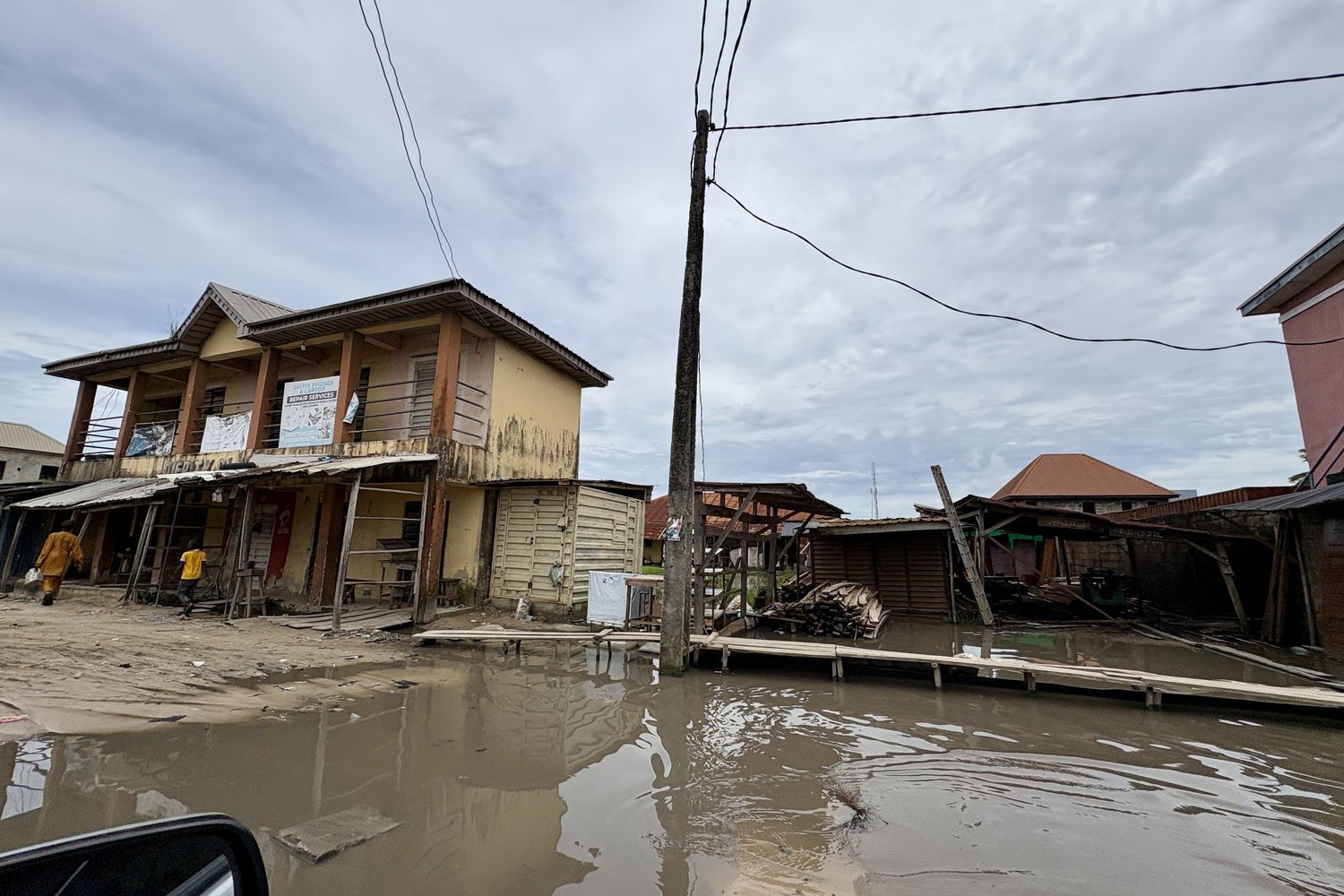
Tolani, our local partner in Lagos, assessed Onosa in November 2025. Residents told the local team they had lost neighbours to avoidable deaths, because people wait until an illness is serious enough to justify the cost and the journey.
A leader at the church that donated the space put it plainly:
We've lost a mother in our community because by the time she got to a hospital, her hypertension was already fatal, and she didn't even know she had high blood pressure.
The community, the partner and the building were all vetted in that assessment. The space is an unused restroom and storage area, it meets Lagos State size requirements for a primary healthcare clinic, and the structure was found sound enough that renovations would be minimal, on a par with the first two clinics we constructed.
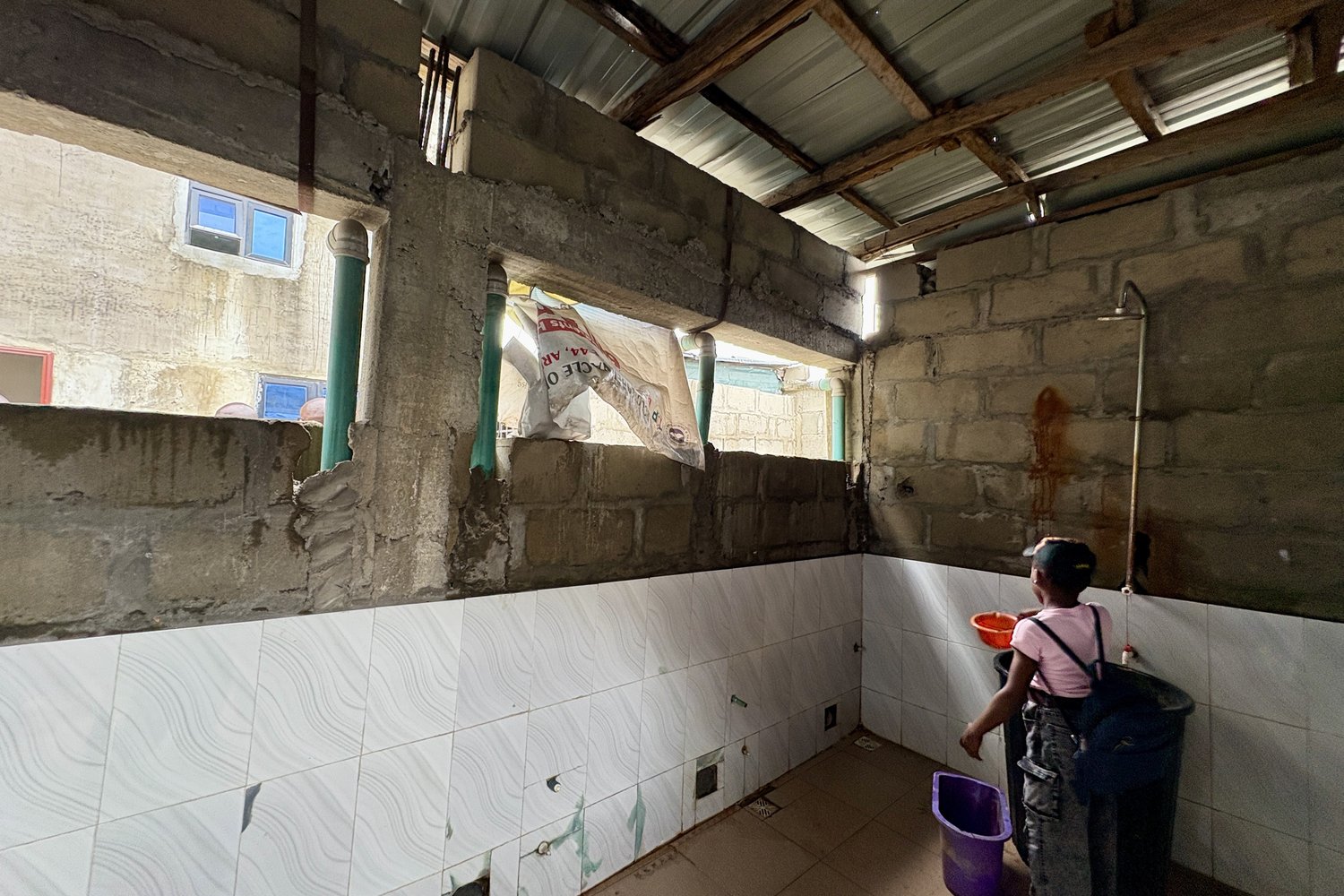
What this funding will do
The build is managed locally by Tolani and her team, who run both existing clinics day to day.
The asset
What this leaves behind is a permanent primary healthcare clinic in Onosa, on the outskirts of Lagos State, renovated to Lagos State standards inside a donated community building.
It is a permanent building, and both our earlier clinics, from 2024 and 2025, are still operating. Over time it should be carried by community contributions and a plastic recycling programme, as at those two, though neither is in place in Onosa yet.
A permanent clinic takes Onosa from one morning a week to five days. Today a volunteer outreach runs from a table, and the medications run out before the queue does:
In June, AHA Initiative (Tolani's team) shared five routes they want to test for covering running costs without grant funding.
The three most likely are Lagos State health insurance reimbursement (LASHMA), nurses and physicians supplied by the National Youth Service Corps (NYSC), and gradual community ownership with local fundraising. LASHMA would in principle cover the full cost, but it is the slowest to come through. The NYSC route would cover about 40%, and community ownership up to 60%.
These are routes they intend to test, not commitments. We are funding Onosa's first year on the assumption that none of them come through. If any do, the clinic needs us less.
One mechanism is already working: the plastic recycling programme at Care Circle, our second clinic, turns neighbourhood waste into cash for operations.
That's all!
Please cast your vote by , and if you have any questions regarding the proposal you can reach out to the Kwanda team on team@kwanda.co