Robotics 🇭🇹, Agriculture 🇨🇲,
and 10,000 Patients 🇳🇬
Bigger than it looked.
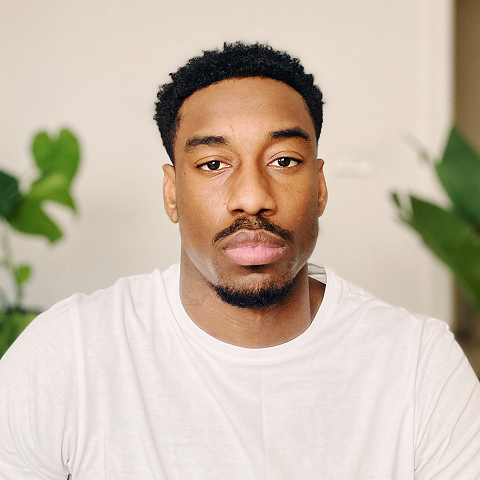
Hey 👋🏾 and welcome to our Q2 2026 impact report.
The quarter was a good kind of boring. We steadily funnelled funds into local projects. Reports came in on time, and we and our partners stayed in perfect sync.
We deployed $28,145 across four projects (up on Q1), passed two new proposals, and welcomed 234 new villagers, nearly double the number who joined the quarter before. Alongside three new fundings we put more into projects already running, and spent time on our new way of filming projects, shifting from static photos to video.
And those projects had a good quarter too. Our two free health clinics in Lagos passed 10,000 patients treated since they opened. In Cameroon 🇨🇲, twelve of a cohort of twenty young farmers graduated, five of them students we sponsored, and one won investment for her farm. Twenty former child soldiers in eastern DRC 🇨🇩 finished vocational training. In Kenya 🇰🇪, 478 girls received reusable period kits made by local tailors, and in Haiti 🇭🇹 the first robotics cohort of the summer kicked off.
Operating costs came down from last quarter, which is the direction we want, but too much of what we raise still goes on running Kwanda rather than reaching projects. Getting that ratio right is the work of the second half of the year. What holds steady through all of it is you: around 1,800 villagers contributing month after month, which is what let us keep funding at this pace.
This report covers what happened across those projects, and where we stand financially. Have a read, and as always, tell me what you think.
Look at the numbers
Financials
Below is a summary of our financials for the quarter. Feel free to also download our financial accounts.
We raised $59,430 over the quarter, a little under $20,000 a month: $19,336 in April, $20,400 in May and $19,694 in June. Monthly income now sits at around $20,934.
We deployed $28,145 in grants to projects. Overheads came in at $40,118, most of it staff at $22,964, with the rest across software, advertising, transaction fees and travel. These costs fell from nearly $50,000 last quarter, so the line is moving the right way, just slowly.
Tangible results
Our impact
Here are some regional and sectoral impact results we achieved this quarter.
This quarter we deployed $28,145 across four projects (up on Q1). The largest share, $13,213, went to our reusable menstrual pads manufacturing project in Kenya 🇰🇪. We sent $6,639 to the robotics maker lab in Haiti 🇭🇹, put $5,635 into the primary-healthcare clinics in Nigeria 🇳🇬, and $2,659 into classroom library corners in Ghana 🇬🇭. Between them, these projects directly supported 1,206 people this quarter. That is more than the $24,658 we deployed in Q1, though we reached fewer people than the 1,423 we supported then.
Since we started, Kwanda has now deployed $296,607 and supported 27,320 people in total. And 234 of you joined this quarter, up from 128 in Q1.
From the field
Some of the photos and videos our field partners shared with us this quarter.
Scroll or drag to see more
)

)

)

)

)

)

)

)

)

)

)

)

)

)


Delivering free primary healthcare in Nigeria 🇳🇬 with microclinics
)


In Nigeria 🇳🇬 we run two free clinics in Lagos: Care Circle in Itire-Surulere and Safe City in Oworoshoki. Nurses Benedeth and Sylvia are there through the month, seeing whoever comes through the door. For most of their patients, who live on a few dollars a month, it is the only care within reach. No one pays a thing.
Across April and May they treated 1,323 people between the two clinics. Safe City had its best month of the year in April with 398 patients, then saw another 312 in May. Care Circle stayed above 300 in both months. Malaria was the most common thing they treated, along with high blood pressure and respiratory infections. Of everyone seen over the two months, 537 were new faces and 786 were people coming back.
)
In May the two clinics passed 10,494 patients cared for since they opened, crossing the 10,000 mark. Safe City is over 8,000 on its own now, and Care Circle has crossed 2,000. Care Circle also runs a small recycling scheme on the side: neighbours bring in plastic waste, it gets sold, and the money goes back into running the clinic while clearing out the standing rubbish where mosquitoes breed. Our funding covers the rest of what it takes to keep both clinics open.
Mrs Emini heard about Safe City from a friend and came in. She put it simply: "They take care of me very well. They give me drugs. Everything is free." That free, steady care is exactly what we funded these clinics to do.
Both clinics are settled now and the returning-patient numbers keep climbing, which is the clearest sign people trust the care enough to come back. For the rest of the year the job is simple: keep the doors open and keep that trust growing.
Reducing period poverty in Kenya 🇰🇪 through local pad production
)
)
)
)
In Kenya 🇰🇪 we've been funding the local production and distribution of reusable kits for three years running, led by local women who hand-sew reusable menstrual pad kits in a workshop in rural Kenya, and those same kits go to schoolgirls nearby who would otherwise miss days of class every month. Twelve women make up the team of tailors, and the sewing gives them an income while they sharpen their trade.
This quarter we reached 378 more girls, taking this year's total distribution of kits to 478, and the team kept the workshop busy producing another 301. The kits went to five schools: 180 girls at Kalau DEB Comprehensive School, and 198 across Nduluku, Miondoni, Makila and Kionyweni. The team paired the kits with menstrual health training, and ran surveys to learn what girls actually face during their periods. The distributions at Makila and Kionyweni, 139 girls in all, landed on Menstrual Hygiene Day under the theme "Together for a Period-Friendly World".
)
The surveys have now reached 17 schools, and the team has completed six training sessions this year. Our funding covered the manufacturing, the transport out to each school, the training and surveys, and the tailors' pay.
Reintegrating former child soldiers in DRC 🇨🇩 through vocational training
)
)
)

Twenty young people in Goma, in eastern Democratic Republic of Congo 🇨🇩, spent the past three months learning a trade. All of them had been associated with armed forces or groups, some taken from the mines they worked in, and all reached the city with no family and nowhere to go. In Congo 🇨🇩 we funded their vocational training paired with psychosocial support.
We funded the tools that got them started. In January the team bought welding torches, hammers, saws, chisels, measuring equipment and protective gear, around $2,779 of kit that our funding covered, and handed it to all 20 trainees on 15 January so training could begin. Over the three months that followed they learned carpentry, welding and metal fitting, and started making real things: furniture, doors, windows, handwashing stations and metal crates. Some of it was sold, and the money went straight back into materials so they could keep practising.
)
Counselling ran alongside the workshops. At first the stigma of where these young people had been made it hard for them to open up, so facilitators moved to smaller groups and activity-based sessions, and trust built from there. None of this is straightforward in a region still living through active conflict. Materials stayed tight throughout, trainees had to share and rotate tools, and three months was a short window to settle a trade.
)
One of them, 17, had been forced from a mine near Masisi, escaped in the night, and was living rough in Goma before he was referred to the centre. What he wants now is simple: a start-up kit to launch his own small trade, and a place in a home for independent young people once he turns 18.
The team in Goma is building a proper exit plan with start-up kits and follow-up check-ins for every graduate, and wants to extend the next cycle from three months to six so the skills have time to hold.
Restoring soil and livelihoods in Cameroon 🇨🇲 through youth-led regenerative farming scholarships
)
)
)

In Cameroon 🇨🇲 we sponsored five students within a cohort of twenty young farmers, all trained in regenerative farming and in how to build a small business around it, learning to read soil and turn a crop into income.
In May we celebrated the cohort's graduation at the Government Bilingual High School in Mfou, where twelve of the twenty qualified as farmer-entrepreneurs. Government officials and local authorities came along, and unveiled something the group had been waiting on: an International Gold Level Award from the School Enterprise Challenge, run by the UK charity Teach A Man To Fish. Each graduate collected a certificate, and the school's staff received letters of recognition for their part in it.
)
Earlier in the quarter the scholars had already turned classroom theory into a working farm. They harvested their first organic spinach and huckleberry, and when full bundles priced out the students who wanted to buy them, they packaged smaller ones at around 30p and sold out inside two days, reaching sixty people nearby. They took turns running the finance, sales and production sides, then entered the whole enterprise into a global "Top School Business" competition. One graduate, Pitou, stood up at the ceremony and pitched the organic poultry and vegetable farm she had planned. A guest in the room was convinced enough to invest in it there and then. She is now a business owner, preparing to take on others.
)
Our funding of these scholarships came to roughly $1,853, covering kits, logistics, training materials and the graduation itself. We're now working on a proposal to extend this scholarship to 10 new students.
Expanding robotics access in Haiti 🇭🇹 through community maker labs
)
)
)

In Haiti 🇭🇹 we fund a robotics programme run by the Hector Foundation, founded in 2020 by Wilhem Hector and Gil Sander Joseph. Both grew up here teaching themselves science with whatever they could find, and won national scholarships abroad in 2019 before coming home to create opportunity for others. The programme is an advanced robotics camp inside of a community maker lab in Port-au-Prince, which matters in a city where schooling is often disrupted and hands-on STEM is hard to come by.
Last year we funded a pilot: a single cohort of 20 students. It worked, so at the start of this year the community voted to extend it. Now that the school summer break has begun, that extended programme has kicked off in earnest: six back-to-back cohorts from June to September, each spending weeks building real hardware in teams and finishing with a working robot. The first of those cohorts, 20 students, started on 29 June, right at the end of the quarter, with five more to follow through the summer.
)
Most of Q2 was the run-up. The team brought on five new mentors, all former students now paid a stipend to teach the next group, opened applications to the 300 young people from the earlier programme, and shipped equipment kits ahead of each session. A supporter in the US donated 20 laptops so students without their own devices aren't shut out. Our $6,639 covered the kits and a small marketing spend.
)
📹 A note on how we made this: this project is the first to run on our new storytelling approach. Volunteers inside the programme film simple footage on their phones as the work happens, and we stitch it together into a short story that shows you the project rather than just reporting the numbers back. Here is the first reel we made from Haiti 🇭🇹:
What's ahead
On the ground, the next few months are busy. In Haiti 🇭🇹 we have six robotics cohorts through to September. In DRC 🇨🇩 we're hoping to extend vocational training and support to more former child soldiers despite the challenges. In Kenya 🇰🇪 we get reusable kits flowing back into schools once term resumes, and we're currently talking about opening up an ecological learning centre in Cameroon 🇨🇲 to bolster the agricultural project. As always we'll keep funding the clinics in Lagos and the new literacy work in Ghana 🇬🇭.
We're also putting more into storytelling. We started investing in video this quarter, and you'll see more of it. The plan is to show you the projects you fund, not just report the numbers back to you.
Behind all of it, the financial priority is discipline: more of every contribution reaching projects and less spent running Kwanda, and rebuilding a bit of a cash cushion as we go.
Thanks for reading.
Jermaine
How you can help?
Pick one, or two.
Thanks for reading
... It takes a village
© 2026. Kwanda Inc. is a 501(c)(3) public charity (EIN: 41-2766953). Donations made through our US tax-exempt giving page are tax-deductible to the extent allowed by law.
In the United Kingdom, Kwanda Ltd is a non-profit fund limited by guarantee (12378728).