From Lagos 🇳🇬 to
Port-au-Prince 🇭🇹
Here's what you made possible.
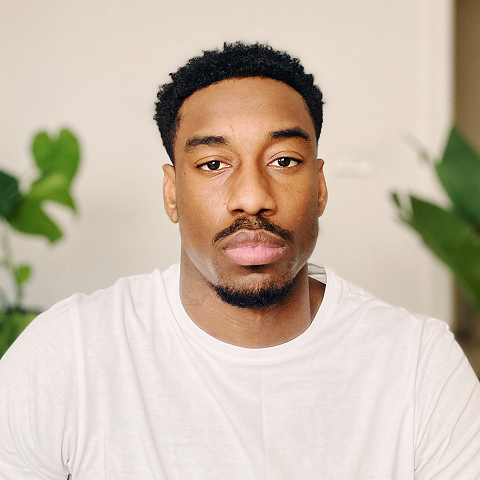
Hey 👋🏾 and welcome to our first quarterly impact report of the year.
This quarter, we put $24,656 to work across four countries. We passed four proposals, and welcomed 128 new villagers into our community. We also secured 501(c)(3) status in the US 🇺🇸, which opens up a whole new fundraising pathway we've never had before. It was a busy few months.
If you read my January and February newsletters, you'll know I've been rethinking our priorities. We spent too much of 2025 chasing false flags; this year, we're focused on funding remarkable projects and telling their stories properly. That shift has shaped much of what happened in Q1, though I'd still call it a transitional quarter.
We backed an emergency response in Sudan 🇸🇩, watched the Haiti 🇭🇹 robotics programme we funded scale from a small pilot to six planned cohorts, and saw the Angola 🇦🇴 women's literacy programme we funded conclude, with 83% of students finishing. We also cut about $4,000 in monthly fixed costs and started planning our push into video content (you'll see this play out more in Q2).
This report covers where the money went, what's happening across projects, and where we stand financially.
Have a read through, and as always, let me know what you think.
Look at the numbers
Financials
Below is a summary of our financials for the quarter. Feel free to also download our financial accounts.
We raised $60,749 in Q1, with monthly income holding steady around $20,000-$21,000. That tells me our base is reliable, and it gives us something solid to plan around. Operational expenses came to $50,259, with staff costs making up the biggest chunk at $29,881, followed by software, advertising, travel, and transaction fees.
We ended the quarter with $6,657 in the bank. That's tight, but we'll build the reserves back up in Q2 now that we've cut spending and need time to let project pilots mature. Our fixed monthly costs sit at $5,669, which means we've got a clear shot at the goal I set last year: get operational costs down to 30% of income by mid-2026, with 70% flowing directly to projects. Getting there means growing income without growing the cost base, and being disciplined about where every pound goes. That's the work of Q2.
Tangible results
Our impact
Here are some regional and sectoral impact results we achieved this quarter.
In Q1, we put $24,658 to work across four countries: Nigeria 🇳🇬, Sudan 🇸🇩, Haiti 🇭🇹, and Kenya 🇰🇪. That funded five projects and reached 1,472 people, with most of that coming from our health clinics in Nigeria 🇳🇬, which served 1,208 patients over the quarter. Sudan 🇸🇩 was a new addition, providing refugee support in a context where very few funders are on the ground. On top of that, we had seven ongoing projects running across six countries.
To put that in perspective: if you contributed $30 a month across Q1, your $80 individually supported roughly 50 people receiving healthcare, relief, or education.
From the field
Some of the photos and videos our field partners shared with us this quarter.
Scroll or drag to see more


Delivering free primary healthcare in Nigeria 🇳🇬 with microclinics
Nigeria 🇳🇬 keeps showing us that healthcare access doesn't need massive infrastructure. In case you're new here, we built two micro clinics in Lagos over the last two years, converting donated spaces into free primary care centres staffed by local nurses and volunteer doctors. Each clinic serves up to 4,000 patients a year, treating things like malaria, hypertension, and respiratory infections in communities where the average household income is around $8 a month.
Across January and February, 1,208 patients received free care across both clinics. The clinic in Oworoshoki treated 681 people, with 60% coming back for ongoing care. The clinic in Surulere had its strongest month yet in February, treating 315 patients, a 50% jump from January as word continues to spread through the neighbourhood. Some patients are travelling over 12km to reach the clinics.
The community also came together to help install solar panels at the clinic in Oworoshoki, with residents raising $350 alongside our top-up funding. The solar installation keeps the lights, computers, and wifi running when the grid cuts out, which in Lagos is often.
Across the two clinics, over 7,000 patients have now received free care since villagers first backed this project!
This continues to be a model project for us in terms of the capital efficiency, and I'm so proud of the impact we've been able have here as a collective group.
Reintegrating former child soldiers in DRC 🇨🇩 through vocational training
This is one of our most sensitive projects. In Eastern Congo, conflict with armed groups has displaced thousands, and children are among the hardest hit. Many are forcibly recruited into armed groups or pushed onto the streets with no access to education or safety. Alain Bayongwa has spent years supporting these young people through a care centre in Goma. What he's found is that the biggest turning point comes when a young person learns a trade they can use to earn money.
In January, Alain's team kicked off their annual vocational training programme. They purchased welding torches, hammers, saws, chisels, measuring tools, and protective gear. On 15 January, these tools were distributed to 20 participants to begin hands-on training in welding, carpentry, and metal fitting. Kwanda covered the costs of those materials and tools, teacher payments and transport for materials.

The training is now well underway and the next phase focuses on connecting graduates to local apprenticeships, and providing counselling for participants who need extra emotional support.
We're planning to continue working with Alain to make this training accessible to more young people in Goma.
Restoring soil and livelihoods in Cameroon 🇨🇲 through youth-led regenerative farming scholarships
This project backs Kuta Cornelius in Cameroon, where him and his team are training marginalised young women in regenerative agriculture and business skills. Their latest cohort is made up of internally displaced girls, most of whom had little access to education or work before joining. We funded 5 scholarships that provided daily meals, protective gear, farm tools, and a seat in a structured programme connecting soil restoration with economic independence.
Q1 was when things really started moving. In January, Kuta's team enrolled the five new scholars to complete a full cohort of 20 and launched the School Enterprise, moving from classroom theory into actual farming. They cleared and prepared one hectare of degraded land near Bamenda, building over 100 specialised ridges to hold moisture through the dry season. They planted organic spinach, huckleberry, and garden eggs using off-season techniques, and brought on an accountant as the programme scaled up.
By February, digital entrepreneurship training was layered on top of the farming work. All 20 scholars (including the 5 we sponsored) began designing individual business plans linking food production, soil restoration, and local food security.
Expanding robotics access in Haiti 🇭🇹 through community maker labs
In 2025, we funded a pilot of an advanced robotics camp for young people in Port-au-Prince. Over two intensive weeks, 20 students completed more than 50 hours of training, and every pair built a working mini Segway robot. The student surveys showed real gains in university-level engineering concepts and the pilot had a 100% completion rate.
Off the back of those results, our villagers voted in February to deploy an additional $6,600 to scale the original pilot into a year-round programme serving 80 to 120 students across up to six cohorts in 2026. Our funding covers robot kits, mentor stipends, subsidised meals, loaner laptops for students without devices, and portable internet routers for when school networks fail.
Six cohorts are pencilled in between June and September. Applications open in the coming weeks. Logistics-wise, 20 laptops donated by an individual in the US have been shipped for onward delivery to Haiti, and the team is assessing which robot kits from the pilot can be reused before ordering new materials. No funds from the new allocation have been spent yet. The team is being deliberate: reusing what they can, locking down the calendar, and getting equipment in place before the first cohort begins in June.
Expanding youth employment in Zimbabwe 🇿🇼 through vocational skills training
Victor Ngwenya has been training young people in practical trades at Chipinge College of Horticulture since 1995, often with very little. He and his team of ten serve students from some of the toughest backgrounds in rural Zimbabwe, where many come from child-headed households and struggle to afford the $160 per semester in fees. Last year we provided funding to equip eight vocational departments with new machinery and tools, and this quarter we saw that investment put to work.
The college resumed lessons on 7 January with the new equipment already in use across workshops in garment construction, welding, cosmetology, carpentry, plumbing, and more. By February, enrolment had climbed to 130 students across five departments. Victor's team also launched a sixth department, auto electrics, expanding training options beyond the original scope.
Our involvement in this project has now concluded. But we'll stay in touch with Victor and his team in case we can do more to support their college.
Supporting women's livelihoods in Angola 🇦🇴 through vocational and literacy training
Samara Dias started this initiative in Luanda, Angola during the COVID-19 pandemic after seeing how quickly life unravelled for women without stable incomes or education. Across Luanda, thousands of women have grown up without the chance to attend school, and not being able to read makes it nearly impossible to find formal work, manage household needs, or take part in community life. Our villagers decided to team up with Samara and cover the costs of daily transport and meal stipends of $2 per training day, so that financial hardship does not prevent women from attending class.

In Q1, Samara's team completed their Literacy Pilot Project. Of the 29 women who enrolled, 24 completed the full programme, an 83% completion rate. Each woman got an average of 108 hours of instruction in reading, spelling, and written communication. Before the stipends were introduced, attendance sat at around 50%. With them, it climbed to roughly 80%. A success!
One participant, a former child soldier, shared that without literacy skills, she could not access government benefits or navigate required forms. When she heard about the free programme, she enrolled immediately. Today, she can read. And one of the first things she proudly shared was: "Now I can read the Bible on my own."
The pilot is now complete, but we're working with Samara to figure out what a second phase looks like and whether there's scope to expand enrolment or add new vocational tracks.
Support for Sudanese 🇸🇩 refugees in eastern Chad 🇹🇩
This one sits outside our typical remit, but it could not be ignored. Since civil war broke out in Sudan in April 2023, over 260,000 refugees have crossed into eastern Chad, overwhelming camps like Adre. We were looking for ways to help and were pointed towards a team running the only free medical clinic in the camp. We asked how we could support their existing efforts, and put $6,650 into their relief operations this quarter.
In early March, they delivered 190 food baskets across four locations, prioritised by severity of need. Altogether, the distribution reached over 1,000 displaced people. Volatile market prices and a wave of newly displaced families made it harder than planned, but the team adjusted, prioritised households with the least access to food, and leaned on community coordination to keep things on track.
This was a one-time emergency response. Their clinic and rain cover work in the Adre camp continues.
What's ahead
For most of the last year, I'd been describing Kwanda by what it does: the open ledger, the grassroots projects, the donor count. That's all true, but it's not the thing that made people care in the first place. The thing that made people care was a much simpler idea: what if we self-funded our own solutions? What if the diaspora didn't wait for institutions or governments, and just started backing the people doing the work? That's always been the vision, and I want to get back to telling that story properly.
This coming quarter, we're going to do more of that. We're also shifting more of our communications towards video: on camera, showing the actual work and the people behind it. Expect to see my face a lot more too.
We've already cut about $4,000 in monthly fixed costs and we're being deliberate about not growing the cost base. The goal I set last year still stands: 30% to operations, 70% to projects. We're not there yet, but we're getting close. And now that we've secured the 501(c)(3), US donors can give tax-deductibly and we can apply for foundation grants that were off the table before. We haven't activated this yet, but it opens up a fundraising pathway we've never had.
We're also in conversation with accelerators and prizes across the continent to find the next wave of entrepreneurs to back. The kind of builders doing things that make you stop and say "I had no idea that was happening." We're going for fewer, more impressive projects with stronger outcomes.
All of this points in the same direction: a world where Africans, on the continent and across the diaspora, fund and lead their own solutions. I look forward to building it with you.
Thanks for reading.
Jermaine
How you can help?
Pick one, or two.
Thanks for reading
... It takes a village
© 2026. Kwanda Inc. is a 501(c)(3) public charity (EIN: 41-2766953). Donations made through our US tax-exempt giving page are tax-deductible to the extent allowed by law.
In the United Kingdom, Kwanda Ltd is a non-profit fund limited by guarantee (12378728).