

20 displaced youth complete business plans in the Soil to Software programme

Posted 5 Mar 2026
Overview
In February 2026, our “Soil to Software” cohort at GBHS Mfou reached a key milestone. Twenty young women moved into the final business launch phase, while we continued practical farm activities through the peak dry season.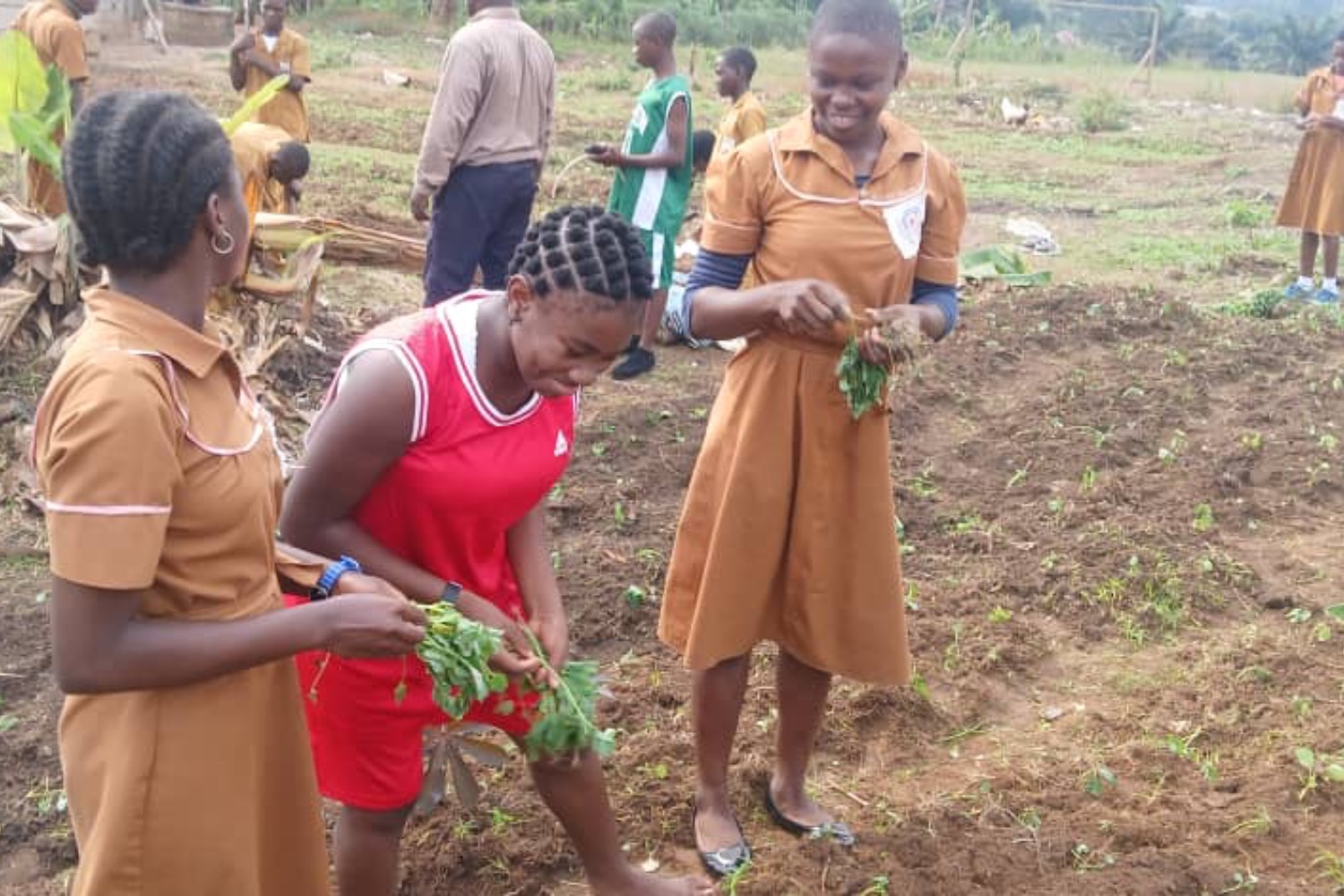
Training curriculum (‘Soil to Software’)
This month, we continued to blend hands-on regenerative agriculture with structured digital entrepreneurship training:
We supported participants to register and progress through the Enterprise Adventure platform.
Modules focused on market research and business model design.
Through one-to-one mentoring, we helped each participant turn lessons into an individual, launch-ready business plan.
Farm progress and climate resilience
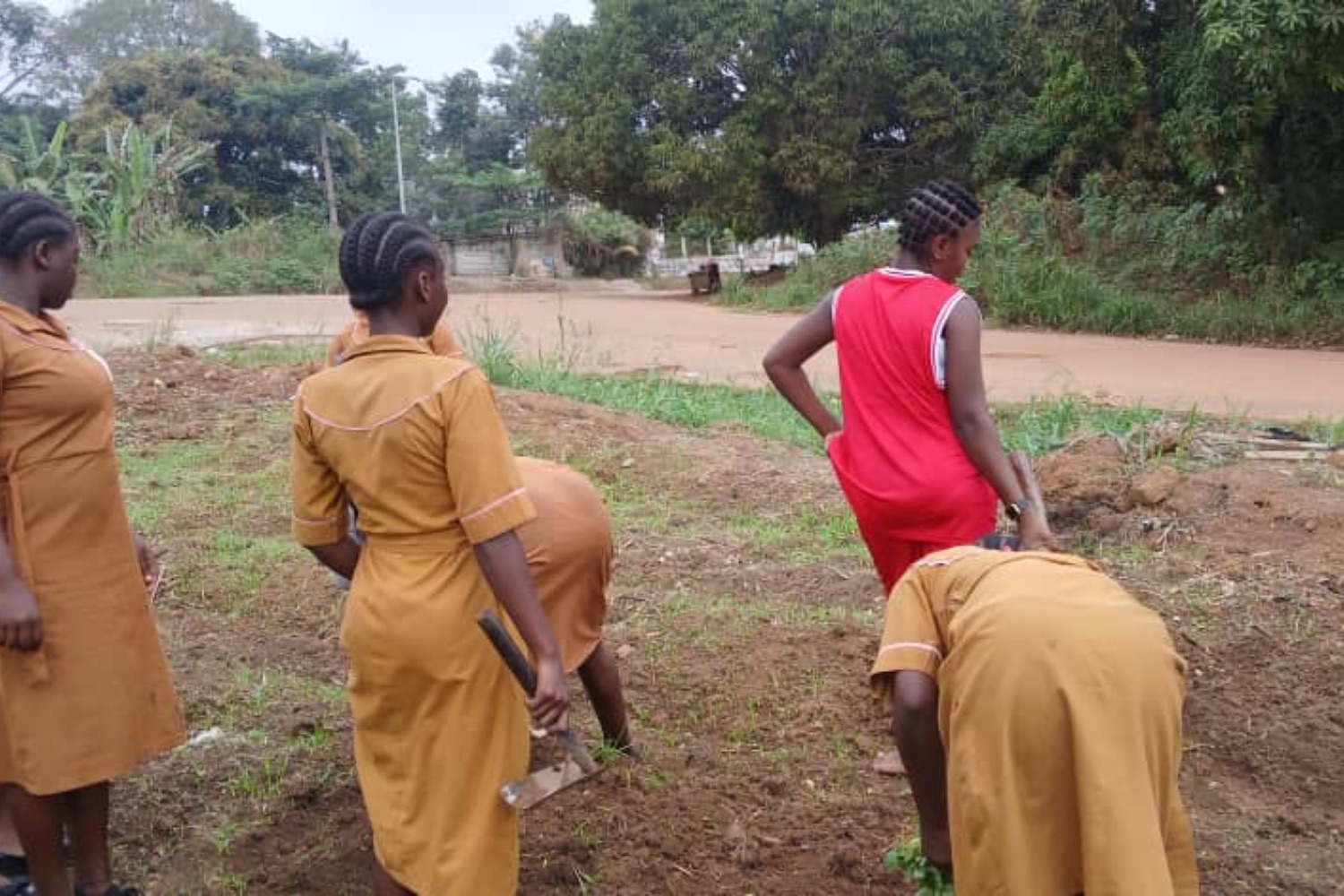
Despite heat and water constraints typical of the dry season, we maintained steady progress:
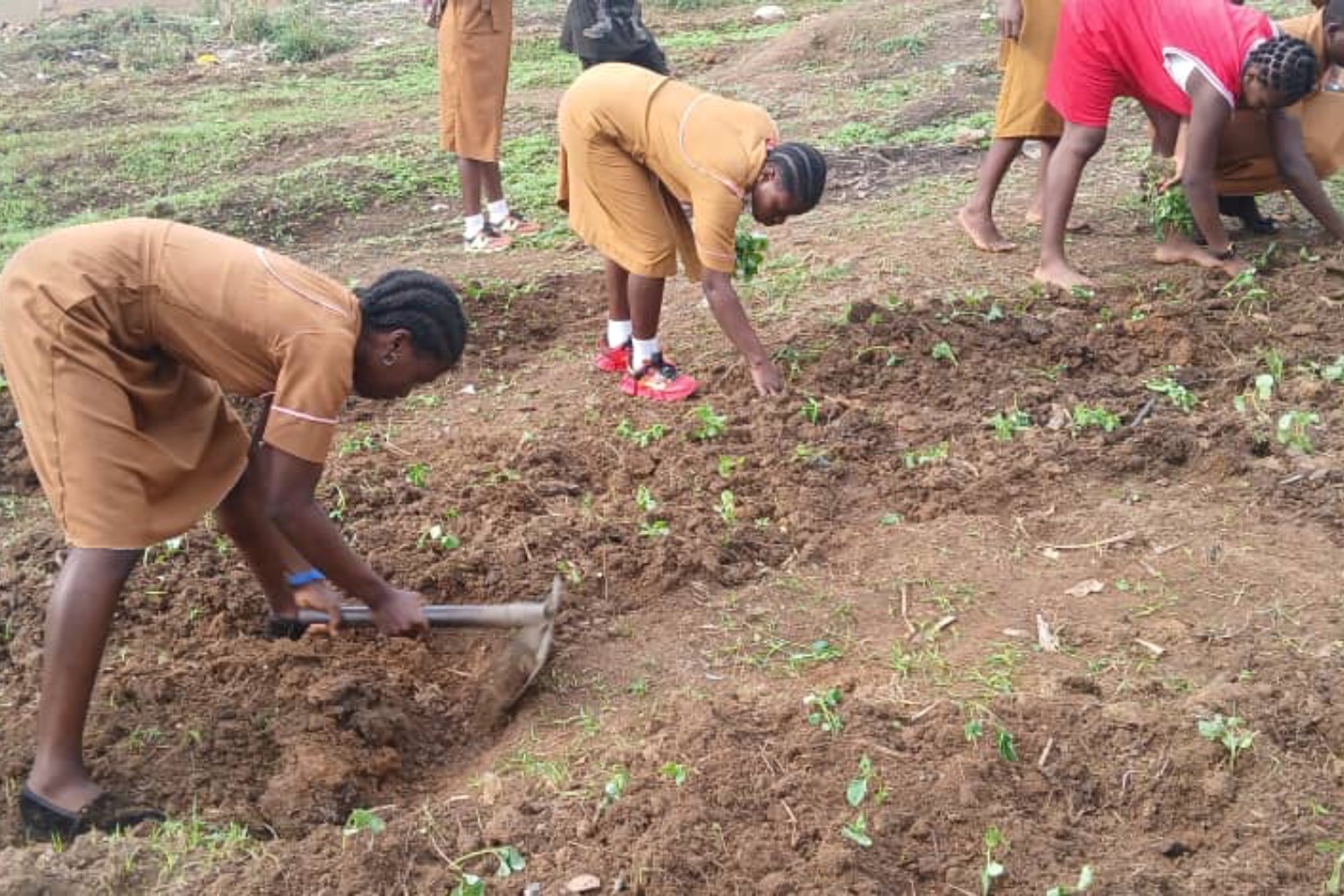
Using early January and February rains, we completed large-scale transplantation of huckleberry across the school farm.
We maintained a daily early-morning watering schedule for more than 100 ridges to protect organic spinach and garden eggs.
We implemented mulching and water-rationing techniques across one hectare to improve moisture retention in degraded topsoil.
Market linkage and institutional engagement
Two developments strengthened the pathway from training to real economic opportunity:
First buyer agreement: We secured a formal agreement with the GBHS Mfou school canteen to purchase the upcoming spinach and huckleberry harvest.
School leadership participation: We ran a community-led development session with the school principal and staff, building institutional ownership and support.
Impact on participants
Participants told us that the combined digital and practical curriculum is growing confidence and widening future plans.
Hear from Maliki, a project participant:
I used to think my world had become very small because of the things I lost, but since signing up for the Enterprise Adventure, I feel like I am standing on a big stage. Seeing students from other schools across the world doing the same missions as me makes me feel powerful. I’m not just growing spinach; I am designing a business that the whole world can see, and for the first time, I can imagine myself as a boss, not just a survivor.
Financial summary
This month, we focused spending on supporting safe, consistent participation and enabling both the farm and digital parts of the programme.
Category | Amount (XAF) | Notes |
Daily meals and nutrition | 75,000 | Meals for 20 participants during high-intensity field days. |
Agricultural inputs | 30,000 | Huckleberry seedlings, spinach seeds, and organic poultry manure. |
Digital connectivity | 20,000 | Data bundles to complete Enterprise Adventure missions and uploads. |
Logistics and transport | 15,000 | Transport of tools and inputs from the local market to the school farm site. |
Protective equipment | 10,000 | Replacement gloves and masks for participants handling bio-fertilisers. |